Most of Google’s rank algorithm is shrouded in mystery. We have to take them at their word when they say social media isn’t a ranking factor (not directly, at least), and guess where factors that used to matter (like keywords) stand. Rarely do they come straight out and tell us what the more than 200 ranking signals are and where they stand in the hierarchy.
Yesterday, during a Q&A session Andrey Lipattsev, a Search Quality Senior Strategist at Google, named the two other top signals in response to a question by Ammon Johns.
Those two signals? Links and content.
That means the top three ranking factors, according to Google, are RankBrain, links, and content. Andrey also stated there was “no order” when asked for clarification on the order of importance.
You can watch the full Q&A session below. The discussion about ranking signals begins around the 30-minute mark.
So, What Does It Mean?
We’ve known for a long time that content and links matter, though theimportance of links has come into question in recent years. For most SEOs, this should not change anything about their day-to-day strategies. It does give us another piece of the ranking factor puzzle and provides content marketers with more ammo to defend their practice and push for growth.
Originally published at www.searchenginejournal.com on March 25, 2016. Original publication written by Danielle Antosz, Digital Propeller claim no ownership to this article. If you found this information useful, you can check out more of her articles here!
Are you creating a positive experience for your customers?
Your audience is the most important aspect of your digital marketing campaign. A trend you’ll see continue to rise in 2016 and beyond is designing a user experience. As you’re designing a website or mobile app for your brand, ask yourself if your users will have a memorable experience and whether your message will leave an impact.
User experience testing and practicing is no longer optional. As quickly as a user finds your website, they will just as quickly bounce and move on if they don’t have the experience they hoped.
It starts with usability, cleanliness, and the value it brings to your audience. But it’s so much more than that. All aspects of your website contribute to the overall experience.
Every business and every website you interact with has their own way of expressing themselves. How are you going to make sure your voice is heard and your customers find what they need on your website?
User Experience Defined
If you ask Google what user experience is, they answer your question with “the overall experience of a person using a product such as a website or computer application, especially in terms of how easy or pleasing it is to use.”
In terms of evaluating your user experience, analyze how your visitors are interacting with the site. How do they navigate across the site? Look at how they consume content and how the design is working.
What’s appealing your customers? UX design works when you allow your customers to complete actions or find information as quickly as possible. When complying with the definition provided by Google’s answer box, you have the capability of expanding your business by appealing to new, pleased customers.
Guide the user through the funnel, helping them to achieve their goals while exceeding your goals.
Aspects Incorporated Into the Experience
When you land on a website, what’s the first thing you’re looking for? Accessibility, usability, value or credibility, or a heading tag showing what the page is about. All of your customers are looking for something unique. The experience starts with a usable design, appealing to the emotions and behaviors of your audience:
Appearance
Tone of Voice
Visual Design & Layout
Consistency
Clear Call to Action
Page Load Speed
In order to truly draw your users in, explore the use of clean concepts paired with appealing images and powerful content. Avoid any distractions that negatively affect engagement and are not necessary to your end-user.
Make sure your users can easily find relevant information to quickly make decisions. The ability to interact with your brand and your website captures attention and leaves your users with a positive experience. All elements of the interface make up the design. Establish trust for your brand by simplifying your interface, offering easy navigation, and quick answers to any concerns your visitors have.
Always continue to look for ways to improve the end-user experience. Test data sets and gather feedback from your customers, family, and friends.
A/B Testing
You may think that your design is appealing and attractive, yet your traffic and conversions haven’t increased. You never know how your visitors will be interacting with your brand. Test different variations of page designs to see which performs best with your audience.
Look at various factors and leverage how you can increase visibility of particular elements to gain more interaction. Which elements need to pop? Your call to action, contact information, icons, and heading tags. Make sure they stand out.
What Should You Test?
Look at aspects of your site that have a high impact on your visitors.
Alter the color schemes and the wording of your call to action buttons. Use clear icons, attractive colors, and different fonts for your text. Focus on the user. Your users are looking for two things from your website:
Simplicity
Helpfulness
Test your landing pages and see which designs draw the most attention and interaction from your visitors. There are many tools and software you can use for your A/B Testing. Try Optimizely to see which areas of your website have the highest engagement levels.
The purpose of A/B Testing is to find issues and problems, and eliminate them from your design. How are you going to increase performance of your website? A/B Testing gives you the information you need to identify any problems so you can increase click-through rates and generate business.
How Do You Generate Business From User Experience?
A first impression makes all the difference. Perception is everything. Enhance your marketing by focusing on UX design.
Be consistent across channels. Make sure the experience between desktop, tablet, and smartphone remains the same. As close to 75% of your consumers are accessing your website on a mobile device, your mobile experience should enable action triggers that increase conversions.
Create a buyer persona for your brand to look at your website from a conversion and user standpoint. Applying UX design to your marketing campaign benefits greatly from user personas, laid out by MarketingProfs.
Once you have a positive perception through user experience, you’ll add positive associations and enhance your reputation. Decisions to buy your product or request your services depends on customer experience. When you optimize the experience, you’ll stand out ahead of your competitors. Optimizing your site will result in:
Reduced Bounce Rate
More Page Views
More Contact Boxes Filled Out
Increased Sales
When your website performs efficiently and is clear and concise, action will be persuaded. In turn, business will be generated.
The SEO Relationship
Your SEO campaign and UX design go hand in hand. Going back to the aspects of page load speed and a clear, simple CTA, these factors matter too in SEO.
As outlined by Search Engine Watch, SEO has as much to do with how users engage on a site as it does with rankings. Higher traffic and better user experience leads to more links, shares, and higher rankings.
Your SEO will benefit from a pleasurable user experience, but only if the two are aligned. Optimizing your on-page factors with highly relevant and compelling content, together with a user-friendly and appealing design, leads to successful digital marketing.
Be sure to avoid both UX and SEO issues with redirects or re-branding your business. Focusing too much on UX can result in a dip in rankings and traffic. On the other hand, too much focus on optimization and not experience will increase your bounce rate and hinder user engagement.
With the same business goals in mind, make sure your SEO staff and UX team work together to find the balance that results in increased traffic and conversions.
Identifying Problems
Are you failing to gain traffic and revenue from your website? Put yourself in the frame of mind of your target users. Understand what they’re looking for and why they’re visiting your website.
What are the issues you’re dealing with? Look into the analytics of your website and landing pages, searching for key metrics that help you identify problems. Analytics for customer journeys enables you to find opportunities for improvement and quickly correct any problems.
Time on Site
How long are visitors on your site? Are you capturing their attention long enough to make your voice heard? Design and experience keeps visitors interested. If they aren’t staying on your site now, enhance and simplify the design and get them to stay.
Bounce Rates
An optimized UX design encourages visitors to explore your website. Without a captivating design, your visitors will lose interest and bounce. Think about the last time you updated the design. If it’s outdated and doesn’t pop, your visitors won’t view you as a credible source for information or trust your services.
This leads to a high bounce rate (when a user lands on your site and immediately leaves). Consistent updates will help lower your bounce rate. Do this effectively by updating your content, improving page load speed, and offering simple navigation.
It all begins with an investment in a design that provides trust.
UX Surveys
You should never stop testing and gathering information about your website. Feedback surveys can deliver valuable information that will help you design a more appealing website for your users. As laid out by KISSmetrics, keep the surveys short and ask only what you need to know. Offer options to garner the most truthful results and feedback.
User feedback is key. According to MarketingProfs, “You can’t create a satisfying user experience without actively and consistently gathering user feedback.” Surveys help put you into the minds of your consumers and learn how your site impacts them.
Use this information to identify issues and create a positive experience.
Exit Pages
It’s always good to look at all angles. A few quick exits may not be cause for alarm. Your competition could be visiting your site and leaving without converting. That’s not a problem with your design.
Looking further into the exit pages, determine whether important pages of the conversion funnel have a high exit rate. If so, you should be concerned.
Analyze each page with a high exit rate. Does it offer value and present your information in an engaging manner? Is there potential to give your users further value on these pages?
A good design will solve your problems and the problems experienced by your customers. Through simple navigation and usability, your design will attract the right audience and establish the trust that leads to further business.
Brands Doing it Right
Get an idea of the types of designs that provide a positive experience. Think about your goals and your target audience, providing an easy solution for increased conversions. Here are brands that have seen success after adjusting their design and interface for the best UX possible.
Virgin America
Reinventing the flying experience, Work & Co simplified and redesigned the Virgin America website in 2014 to simplify the booking experience. It’s a clear structure that is not cluttered so your eyes focus on the important information.
All of your needs are above the fold for easy booking and no distractions. Travelers are busy and Virgin America created a design that responds beautifully to their behaviors. It’s responsive, loads quickly, and meets the needs of travelers quickly with its basic nature.
Airbnb
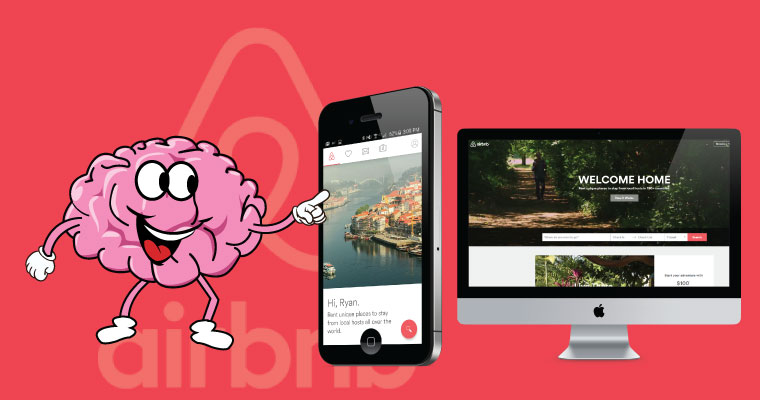
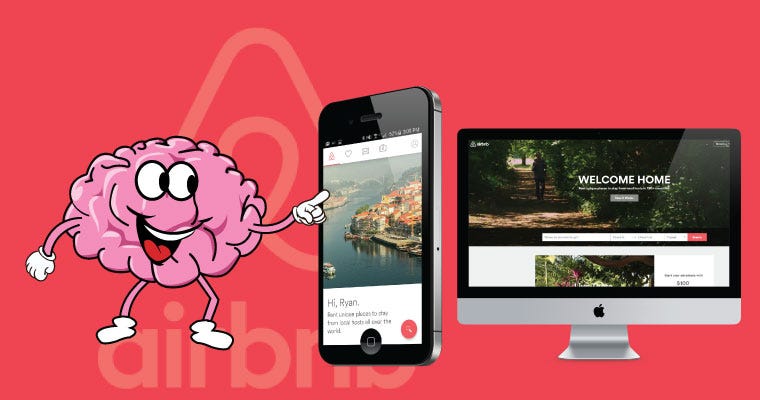
When you visit Airbnb, you’re looking for a place to stay. The design is welcoming, easy to use, and offers convenient navigation. Wherever you’re going, Airbnb lets you know right away that they have the destination you’re seeking.
For new users, you can browse all available host houses before logging in and creating an account. The team of designers at Airbnb look to impact all aspects of your journey. From the mobile app to the website, each visit is personalized and invites you to keep scrolling.
High engagement leads to more interaction, more returning visitors, and more conversions. The focus on UX is a leading factor that helped grow the company to over $10 billion.
LA Times
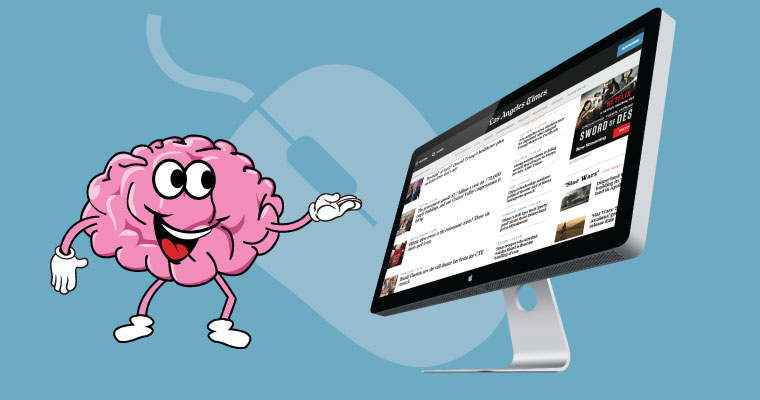
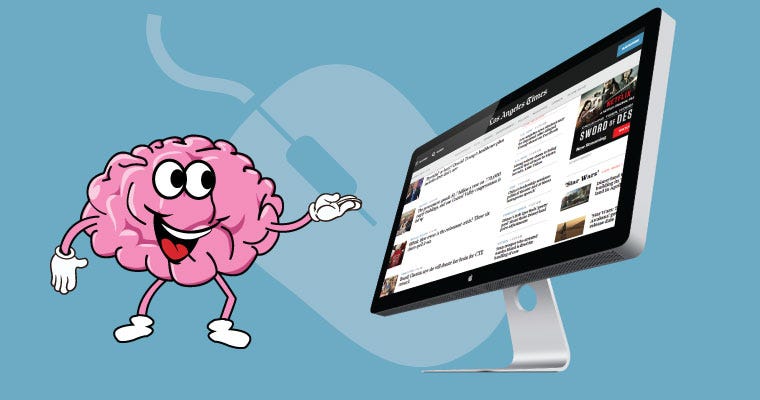
As one of the leading sources of news in the entire country, the LA Times shifted to a focus on experience. The bold design puts the focus on multimedia and it’s fully responsive, transforming how its users consume news.
Reaching the user with their interface and the advertiser with their design improves the experience for all visitors. They set the standard for today’s news consumption with its mobile-first design that is visually striking and simple to navigate.
The company responded to a shift in the industry and appealed to their users by providing a design that connected with the tendencies of their audience. They looked at the problems both readers and advertisers were experiencing, and developed a responsive solution that solved those problems. It has resulted in more engagement and more page views per visit.
As UX stays on the road to a multi-channel and multi-device accessibility, you’ll have new opportunities to design an interactive app or website. Give your users a sense of control with an empowering UX and take some advice from these brands to give yourself a competitive advantage.
Key Takeaways
Creating a memorable user experience results in a significant ROI for your business. UX is a benefit to your brand. The best way to attract repeat customers and grow your business online is by continually testing. Test daily, weekly, or monthly.
Your first impression needs to resonate. Appeal to your visitors, and focus on optimizing the experience and the value of your site for increased exposure to the right audience.
Find out what’s connecting with your audience and deliver a desirable design. Do just a little more than the rest, and explore new ways to personalize your brand. Through your website and mobile app design, think about the experience you are providing. This will lead to more downloads, more visits, and more interaction with your brand.
Use multiple approaches and methods to deliver your message to your audience. Provide easy navigation with a clean design that drives engagement. Engage users with top of fold elements to keep them scrolling through your site.
Designing an excellent experience is crucial. The internet is too crowded to blend in. The more consistent of an experience you create, the more you’ll reach your audience. The experience will always be present. How are you going to make that experience positive?
Image Credits
Featured Image: Image by Gabrielle Frake. Used with permission. In-post Photos: Images by Gabrielle Frake. Used with permission.
Disclaimer; This article was originally written by Ryan Clutter for Search Engine Journal. We do not claim any ownership of the content. If you enjoyed reading this you can check out more of Ryan Clutter’s articles here!
Ryan Clutter
Ryan Clutter is a Content and SEO Specialist at 1SEO.com Digital Agency. He works for clients in numerous industries, creating relevant content through comprehensive SEO strategies. He has a passion for helping others and achieving the best results for a winning online marketing strategy.
If you’re just in Yelp or the Yellow Pages, you’re not truly “local” yet. You’re missing out on
audiences native to a particular city.
Yes, you have to be in these big directories. But marketing in the true local web means creating campaigns relevant to audienceswhere they live.
In this piece, I’ll outline our team’s recent findings on the anatomy of the true local web,
with a focus on how “Web National” brands and app developers can organically access local customers in any community.
What is the “true local web?”
The true local web is composed of websites that are published by actual local organizations,
as opposed to websites that are created by national publishers that don’t have a real
local presence. In other words, these are websites published by entities with actual
addresses in the city you’re trying to market to.
The true local web includes not just local retail or service businesses within a given city,
but other organizations, as well. It includes the nonprofits. The arts. The news publishers,
bloggers and events native to a location.
Who should care about the true local web?
There are three types of businesses vying for web traffic in CITY X:
Businesses local to CITY X
National chains with brick-and-mortar locations in CITY X
“Web National” businesses that serve CITY X without a brick-and-mortar location (think Uber)
When you write about “local marketing,” most people assume you’re talking about
the first option above, maybe the second. The thirdgenerally gets ignored, even though
it’s arguable that these organizations are most in need of true local web connections.
“Web National” isn’t a ubiquitous term yet, but we’d argue that it’s a distinct category,
separate from other national brands.
All three business types care about web traffic and search engine rankings within CITY X,
but their strategies for getting there are going to vary.
The true local web is more easily accessible for the local business owner. She already
knows people on various town committees; maybe she bowls with local bloggers on
Tuesdays. Even if she doesn’t already have these connections, they’re easy to pursue
because she’s already a local in her target market.
True local marketing — local businesses are already there.
National chains with smart marketers will encourage their brick-and-mortar store
employees to leverage their local connections. Supported by their national advertising
and PR strategies, each unique location doesn’t have to spend much on local marketing,
thanks to the “rising tide” nature of these big chain businesses.
But how do “Web National” organizations solidify their place in the market?
They haven’t yet curated local connections, nor do they have physical storefronts
and signage to draw in customers. For these reasons, web national organizations
may need the most help accessing the true local web.
True local web engagement for traffic & rankings
If the true local web is an online manifestation of a city, then partnerships with these local organizations are the way to access true local web traffic and to influence local PR,
social media and search rankings.
A bit about true local partnerships
Local sponsorships are the bread and butter of a community. But to find them, you have to take the time to look in the breadbox and dairy drawer!
Sponsorships are the crux of the true local web. They allow local, chain or web national businesses to join community efforts, often including a myriad of advertising for one’s dollar.
We often see local sponsorships overlooked because they’re complicated and disjointed. Each organization is unique, with its own price points, benefits and requirements. But the benefits for local visibility make them worth pursuing.
True local social media marketing
Going local with social media means attracting pages and influencers that are region-specific. This could mean individual bloggers and local celebrities, or it could mean Meetup or Facebook groups focused on a particular city.
As with sponsorships, they’re disjointed, but they also provide a way to meet potential customers without the noise of traditional marketing tactics. When you have to dig for a true local fit, there isn’t as much competition.
True local social media opportunities can be found by connecting with nonprofits, clubs, events and organizations looking for monetary or in-kind donations. Even partnering with a nonprofit for an employee volunteer day can secure social media mentions to the organization’s local following. These activities are also primed for storytelling, which is why web traffic can also be served by public relations.
True local PR
Local news is alive and well… online.
Local journalism isn’t dead. But it has moved online. The upside is that there are now many more options when it comes to outreach — a more liberal company may even consider bloggers as members of the press. After all, many of them cover a beat, share local news and hold themselves to legal standards.
But as with finding and coordinating partnerships with organizations, working with local press can be a messy enterprise. In our experience, local journalists are spread thin, and they don’t often have time to evaluate every unique pitch from an unknown source. There are two best practices for securing local press, and both could be considered part of a long-game strategy:
Show up. The upside of “true local” is that journalists in a given city won’t be hard to track down. They’re wherever news and community can be found. The more a brand is involved with community goings-on, the more chances brand representatives have to meet and greet the reporters covering these events.
True local blogger engagement
Topical searches for bloggers are not new, so why not search for online influencers who live in a particular location? Try using advanced operators to search “about” pages for mentions of your target city, and see who comes up. (For additional ideas, we’ve discussed some great tactics for finding local bloggers in the Citation Labs Local Webinar.)
Local blogger engagement can work for one-off campaigns or as part of a larger event (see below). While not all bloggers in Dallas consider themselves “Dallas bloggers,” with the market saturation of online writers over the past decade, many are looking for a way to stand out from the crowd. And local blogging can be a real money-maker.
In-person engagement: Where true local tactics link together
Event engagement is as local as it gets. Events may come with a booth, tickets or a table at the dinner party. And it’s a tactic primed for creative thinking. Local presence can drive so much more than awareness; a presence at these events can be used to:
generate app downloads;
sign up new customers;
hand out coupon codes;
engage with local bloggers and press; and
reward existing local customers.
If you’re at an event, you should be doing everything you can to drive potential customers to meet there. Web national organizations that can’t afford to send a rep to CITY X may even recruit a local customer to be a brand advocate in the area. What better way to reward frequent customers than to give them free tickets to local festivals?
Additionally, if you spend money on local advertising, why not let people know that they can come meet you at an event?
“We Are A Proud Sponsor of the BBQ Festival! Come Get a Dessert At the ACME, INC Booth!”
If you design your event engagement properly, there might be a case for local press or bloggers to be there. There are a lot of ways to weave these pieces together by being physically in a location, at a specific event. Oh yeah, and you’ll most likely get a link and social media mention from the event, too.
Welcome to the neighborhood.
Some opinions expressed in this article may be those of a guest author and not necessarily Search Engine Land. Staff authors are listed here.
Disclaimer; this article was originally written for Search Engine Land by guest author Garrett French, and we do not claim ownership of this article or it’s contents. If you enjoyed this article, check out Search Engine Land for more like this!
Garrett French is the founder and chief link strategist of Citation Labs, a link building agency and campaign incubator. He’s also the founder of ZipSprout — Citation Labs’s sister agency focused on local marketing. He’s developed multiple link building tools, including the Link Prospector and the Broken Link Finder. He also co-wrote The Ultimate Guide to Link Building with Link Moses himself, Eric Ward. Garrett and his team lead monthly webinars on enterprise content strategy and promotion from the Citation Labs Blog.
Friday, 18 March 2016
Blurred Lines: When Marketing, PR, and Content Overlap
From social selling to new opportunities with mobile advertising, every marketing organization now has a cornucopia of channels through which to work its magic.
Yet, different channels and opportunities demand different skills, and the effort needed to coordinate all the necessary components and team members is immense. It can be confusing at best, unproductive at worst.
Let's take a simple example: an infographic.
You've compiled the information and applied beautiful design. Now what? You probably have 10 different channels to send it through. Should one person own every channel and strategy for promotion? I mean, it's just a simple infographic, right?
The answer is "no," and here's why.
Your content marketer who created the infographic may not know the ins and outs of expertly targeting social media to drive traffic to the infographic. Your social media maven may not understand why including a link in your email campaign to the infographic is critical to nurturing certain leads. And you might think that blasting the infographic out to a list of media contacts will get the it reposted by top bloggers, but you wouldn't be nearly as successful in securing media coverage as your PR teammate would.
Aly Saxe is CEO of Iris PR, a cloud-based SaaS platform designed by PR pros for PR pros.
Even with more than 500 million people checking out Tumblr each month, Tumblr failed to reach its 2015 revenue goal. And Yahoo is in a tailspin, with its board seeking a soft landing, likely in the hands of another company like Verizon. Things appear to have turned so sour that Yahoo’s sales teams are meeting with agencies not to sell them ads but simply the idea that everything’s okay at the company in order to avoid more examples of brands cancelling six-figure ad buys because of lost confidence in the portal’s business, according to one person familiar with the matter. A Yahoo spokesperson did not respond to a request for comment sent on Wednesday.
Based on interviews with several agency execs, the feeling is that Yahoo has mismanaged the Tumblr acquisition. Complaints extend beyond brand-safety concerns and criticisms of Tumblr’s shallow ad-targeting options, though those remain. Additionally, neither company did a good job of helping brands get their Tumblr blogs up and running, a prerequisite for buying the platform’s primary ad format. And after Yahoo took control of Tumblr’s ad sales in February 2015 — seemingly in order to better package the portal and social network — Yahoo’s sales team neglected to make much effort selling Tumblr.
But now, in the shadow of its parent company’s demise, Tumblr is trying for its own revival. It has begun to pitch agencies on “blogless” sponsored posts, dropping the requirement for brands to operate a Tumblr blog in order to run sponsored posts in users’ feeds, or dashboards. And as Business Insider reported in February, it has retaken control of its ad sales.
”While we experienced a slower ramp in monetization than we initially expected, we’ve seen continued growth across all areas of the business, including revenue, users, and engagement. Since the acquisition, Tumblr has introduced a number of innovative ad products to maximize value for our advertisers and best meet their needs. To further support these efforts moving forward, we have returned to a Tumblr-dedicated direct sales team,” a Tumblr spokesperson said in an emailed statement, declining to make a Tumblr exec available for an interview.
“It was a billion-dollar bet that certainly has not yet paid off,” said Ben Winkler, chief digital officer at Omnicom’s OMD. “From a social platform perspective, it’s simply not on the radar for most of our clients once they get through Facebook, Twitter, Instagram, Pinterest, Snapchat. There’s not much left over for the folks at Tumblr.”
With its sales team back at the helm and removing a big barrier to buying Tumblr ads, Tumblr execs have been meeting with advertisers and agencies in an effort to repave its ad business after a bumpy past few years.
“It’s getting on the same page of what we’re looking for from them and what are our top priorities,” R/GA strategy director Dave Surgan said of the meetings. “It was really about their roadmap for the year and making sure they’re aligned with what our needs are.”
That might sound like an introductory meeting, and it some ways that’s exactly the kind of meeting Tumblr needs to be conducting considering its recent history. When Yahoo announced it was acquiring Tumblr, the social network was young, with a lot of upside. It was like a college basketball player who had a solid freshman season but was still growing into his body and developing his shot when he got drafted into the NBA. Tumblr’s ad business was only a year old when Yahoo bought the company, and Tumblr had only begun placing ads in users’ main content feeds a month earlier.
“There was certainly an uptick immediately after the acquisition where Tumblr got enough press and was top of mind for senior execs. But I think after that blip it faded into the background a little bit,” said Jesse Cahill, head of media for North America at Essence, which is owned by WPP’s media-buying arm, GroupM.
One cause for the optimism surrounding the acquisition was the hope that Yahoo would be able to help Tumblr’s ad business mature. Tumblr had piqued marketers’ interest for what was perceived as a broader creative canvas than other social networks like Facebook and Twitter offered at the time, and Yahoo had purchased it early into the renewed focus on brands producing content that didn’t look like a traditional ad. The native advertising trend was just getting started, and so was Tumblr. But neither could take off without brands on board.
Tumblr’s creative canvas has been something of a double-edged sword. Many brands like Warner Bros. and Nestle gravitated to Tumblr as a hub for the branded content they were publishing online that’s easier to maintain than a standalone site. But many more seemed to be held back by the specialization and extra effort it required compared to their Facebook or Twitter accounts.
“Customization is a blessing and a curse. Many if not most clients are looking for turnkey solutions, not empty canvas solutions,” Winkler said.
“If you’re thinking about launching a Facebook or Twitter channel, [the planning process] is really just ‘what’s your channel art, what’s your first bunch of posts to push live during the launch period and what’s the operational model?’” said Michael Fasciano, VP/director of Digitas Studios. “With Tumblr it’s really about custom-creating a whole look and feel and experience, just as you would any other site.”
Additionally, Tumblr’s audience appears to reward brands that focus their presence, like how normal Tumblr users may operate Tumblr blogs dedicated to minutiae like drunk furniture and objects that can be converted into beards. “Whenever we launch a Tumblr with a brand we generally have a very specific angle for it, as opposed to it just being ‘follow us for more general brand updates,’” said Surgan from R/GA.
Running a Tumblr blog isn’t “overly cumbersome as long as we have the right lead time,” which means time to plan out the content strategy and put pieces in place. Tumblr’s team “is able to help you though some of that process,” he said, referring to consulting on designs and themes and helping to secure trademark URLs. But marketers apparently need more help than Tumblr has been able to offer.
Unlike a Facebook page that could be managed by an art director, copywriter and social strategist, a Tumblr blog also requires a tech person who can handle coding and user experience, said Fasciano. “It’s a larger beast, and I think if the Tumblr team can find a way to support that added challenge, they would have more brands jumping into the platform,” he said.
One would think selling to Yahoo would have helped Tumblr address that challenge. Not only would Yahoo have offered more resources in the form of money and head count, but it also had longstanding relationships with a large number of advertisers. Yahoo could have done for Tumblr what Facebook did for Instagram. Instead, it appears to have had the opposite effect, especially after Yahoo’s sales team took control of Tumblr’s ad sales in January 2015.
Yahoo’s salespeople have a solid reputation in the industry, but for pitching Yahoo, not Tumblr. “Tumblr is a different enough beast,” said Cahill, who said that Yahoo’s team would “underserve Tumblr” in meetings with Essence and its clients since the ad sales takeover.
“It tends to be the thing that is left to the very end of the meeting. You thought you would have 10 minutes for it, and you end up having 30 seconds and it becomes very much an afterthought,” Cahill said. “I think the association with the Yahoo behemoth has held it back.”
“They leaned too heavily on a sales force that didn’t understand the platform enough,” said Ray Romero, chief digital officer at GroupM’s MetaVision. He added, “From our side of the table it’s harder at times to put the pieces together when they don’t know how to put the pieces together themselves.”
Now, Yahoo is letting Tumblr put its own pieces together again and making it easier for brands to advertise on Tumblr without managing a Tumblr blog, but is it too late? Apparently not. While several of the agency execs Marketing Land interviewed for this story said that Tumblr has fallen short of the expectations levied on it at the time of the Yahoo deal, all said it’s too early to write off the company. “I don’t think Tumblr’s missed its moment,” said Fasciano.